
How Data Analysis Can Transform Your Marketing Decisions

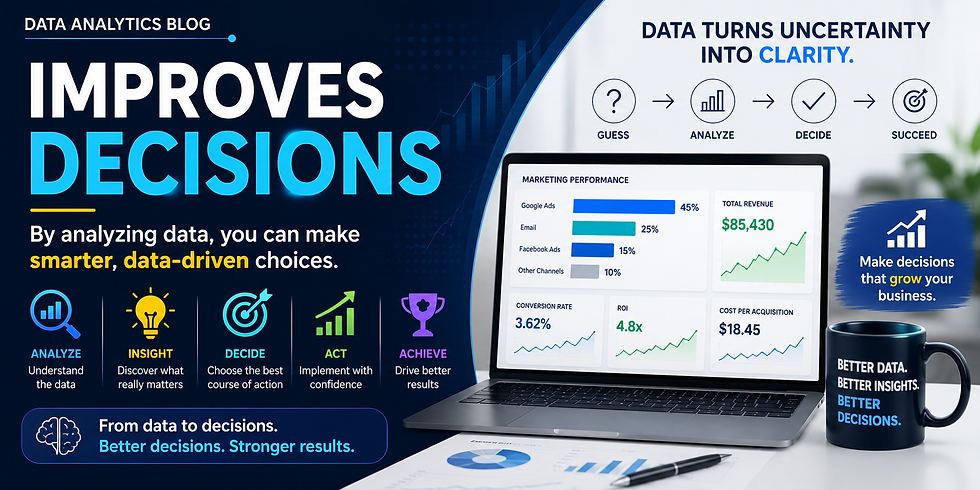
Imagine spending $10,000 every month on marketing. Sales are coming in, but you face a common challenge: Which marketing channel is actually driving those sales? Without clear answers, businesses often split budgets evenly across Facebook, Google, email, and other channels. This approach wastes money and misses opportunities.
Data analysis changes everything. It reveals what works, what doesn’t, and where to focus your efforts. This post explains how using data can transform your marketing decisions, helping you spend smarter and grow faster.
Why Guesswork Hurts Your Marketing Budget
Many businesses rely on gut feelings or assumptions when allocating marketing budgets. For example, you might think Facebook drives the most sales because it brings lots of traffic. But traffic alone doesn’t guarantee conversions.
Without data, you risk:
Spending on channels that don’t generate revenue
Missing out on high-performing campaigns
Wasting money on ineffective ads
Making decisions based on opinions, not facts
Imagine one campaign consumes 30% of your budget but brings almost no sales. Guesswork lets this continue. Data analysis stops it.
What Data Reveals About Marketing Performance
When you analyze marketing data, patterns emerge. Here’s a typical example from a $10,000 monthly budget:
Google Ads generates 45% of sales
Facebook drives traffic but fewer conversions
Email marketing has the highest return on investment (ROI)
One campaign consumes budget without meaningful revenue
This information shifts your focus. Instead of guessing where to spend more, you ask: What does the data show?
How Data Analysis Supports Better Decisions
Data analysis helps businesses in several key ways:
Compare different options
See which channels deliver the best results side by side.
Identify what is and isn’t working
Pinpoint campaigns that need improvement or should be cut.
Reduce unnecessary spending
Stop funding ads that don’t generate sales or leads.
Understand risks and opportunities
Spot trends early and adjust strategies before problems grow.
Make decisions with greater confidence
Back choices with clear evidence, not just intuition.
Combining Data with Business Context and Judgment
Being data-driven doesn’t mean blindly following numbers. The best decisions come from combining:
Data that provides evidence
Business context that explains why numbers look a certain way
Human judgment to interpret insights and consider factors data can’t capture
For example, a campaign may show low sales but builds brand awareness or supports customer loyalty. Data alone might suggest cutting it, but business context and judgment can justify continuing it.
Practical Steps to Use Data for Marketing Decisions
Collect accurate data
Use tools like Google Analytics, Facebook Insights, and email marketing reports.
Set clear goals
Define what success looks like: sales, leads, website visits, or ROI.
Track key metrics
Focus on conversion rates, cost per acquisition, and revenue generated.
Analyze regularly
Review data weekly or monthly to spot trends and adjust quickly.
Test and learn
Run A/B tests to compare campaigns and improve results.
Adjust budgets based on findings
Shift spending to channels and campaigns that perform best.
Real-World Example: Shifting Budget Based on Data
A small e-commerce company spent $10,000 monthly across Facebook, Google, and email. After analyzing data, they found:
Google Ads generated 45% of sales
Facebook brought lots of visitors but only 10% of sales
Email marketing had the highest ROI, with a 300% return
One Facebook campaign spent $2,000 but generated no sales
They reallocated $1,500 from the underperforming Facebook campaign to email marketing and Google Ads. Within two months, sales increased by 20%, and marketing ROI improved significantly.
Avoiding Common Data Pitfalls
Ignoring data quality
Poor or incomplete data leads to wrong conclusions.
Focusing only on vanity metrics
Traffic and clicks matter less than conversions and revenue.
Overreacting to short-term changes
Look for consistent trends, not one-time spikes.
Neglecting customer feedback
Combine data with direct input from customers for a fuller picture.
The Bottom Line
Good marketing decisions should never be based on guesswork. Data analysis provides clear evidence about what works and what doesn’t. It helps businesses spend smarter, reduce waste, and grow faster.
Remember, data is a tool, not a rule. Combine it with your business knowledge and judgment to make the best choices.
Better data leads to better understanding and better decisions.
Start analyzing your marketing data today and watch your results improve.


Comments